
Cost & Business
The difference between entrepreneurial success & failure can narrow down to cost management. Costs include all business expenditure from fixed costs like rent & wages to operational ones like transport & internet.
My focus is on operational costs which are the ‘naughtiest’ consumers of revenue as they facilitate the service aspect of the business & daily operational activities. They take form in airtime, transport, internet, marketing, advertising & kickbacks (Important).
The first step of the journey is identifying the key cost areas of the business. This can be done through a spreadsheet software like Microsoft excel which gives you a framework to understand the cost areas of your business & identify potential leakages.
The second step involves the analysis of your day to day activities to evaluate the return on the costs incurred. Question that will arise include; Are trips to client premises being facilitated in pricing, is the investment in the internet good enough? can the excess expenditure on fuel be invested in a delivery motorbike personnel? These & many more observations will help reduce unnecessary leakages from the business operation.
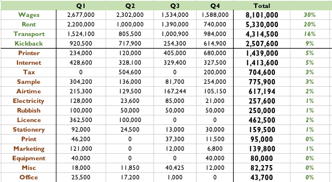
A sample of the operating cost categories from a given period of the business
Tips
- Success requires a proper book keeping culture
- Track all expenses from the visit to the toilet to the income tax payment
- Plan the business’s service & activity system on the basis of operating costs. Choose an activity system that returns the highest form of value.
- Give an equal amount of time & effort studying your expenses as you would with your incomes
- As the data set grows, input the data into a spreadsheet program like Microsoft Excel to get a deeper insight into the expenditures of the business operation
- Seek to write a detailed report of key findings from your operations. This knowledge creation process educates you on your business & how best you can improve it.
Outcomes
- A proper understanding of a business & where its money is spent
- An understanding of average expenditure over specified periods like a day, month, quarter or year to help the planning process & the required revenue to match the costs
- Applied checks & balances ensure the business generates a better profit margin which means more money in the bank.
Thank You for Reading.
 Ideation256